A wise human would have an understanding of the supply chain and how the pieces fit together. But it’s against our nature to think about it.
Paolo Bacigalupi
- What are Supply Chain and Supply Chain Management?
- What are Strategic Supply Chain Priorities?
- What are the Major Trends Affecting the Supply Chain?
- Four Questions to Ask Yourself
- Frequently Asked Questions
- What is a supply chain?
- What is supply chain management?
- What is the difference between supply chain and logistics?
- What is the difference between supply chain and operations?
- What is supply chain resilience?
- What is a sustainable supply chain?
- What is sustainable supply chain management?
- What is a digital supply chain?
- Helpful Materials

You will often find supply chain optimization on the agenda of board meetings, and the data backs up why. McKinsey’s 2023 global supply chain survey of more than one hundred supply chain leaders across six continents found that supply chain risk has moved from a niche topic to a top-three item on the senior-management agenda. That is the view from the top of large organizations.
Why does it sit so high on the agenda? The answer is simple. A lean, sustainable supply chain is what keeps a business profitable and its customers loyal.
Over the last several years, beginning with new tariffs on Chinese supply sources and then compounded by the pandemic, we have lived through significant supply chain disruption. Supply chain excellence has come to mean more than supply chain efficiency. The modern strategy now asks for supply chain transformation that builds in resilience. Every supply chain leader carries a shared responsibility for building a sustainable supply chain for the business.
If you are new to the planning and logistics side of the business, or you simply want to understand it better, I wrote this guide to walk you through the basic best practices of supply chain management (SCM).
What are Supply Chain and Supply Chain Management?
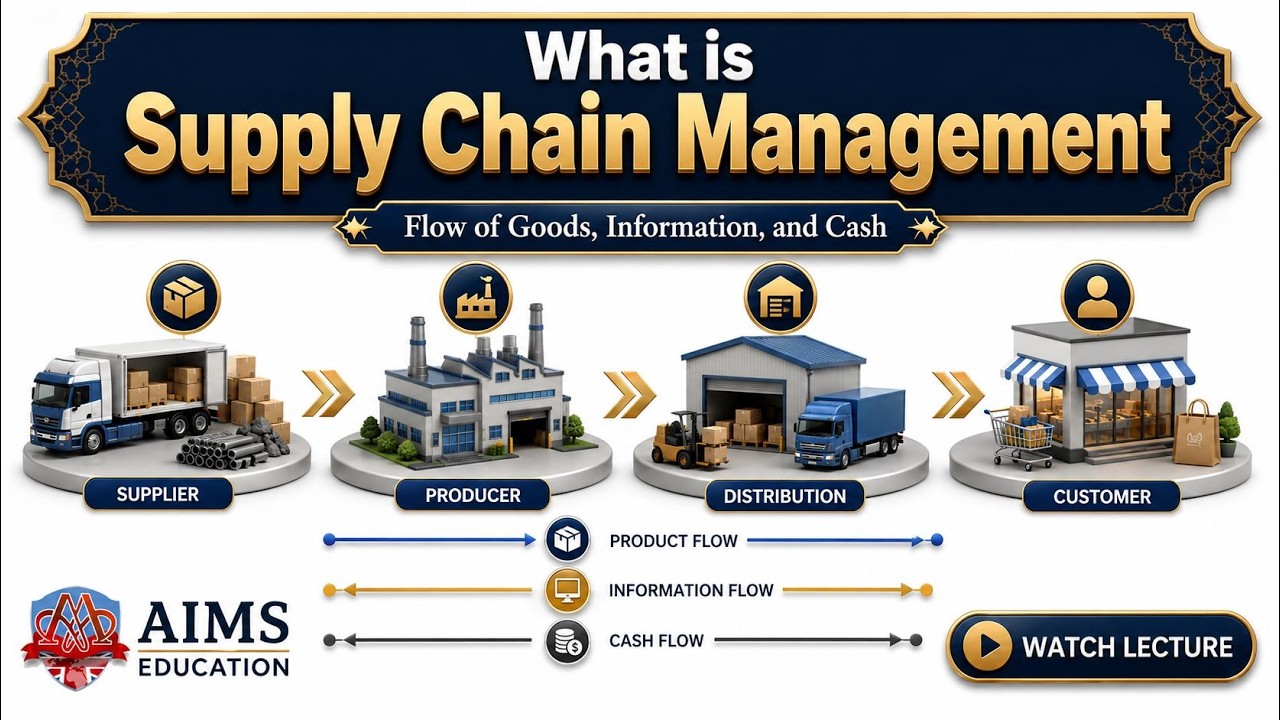
A supply chain is also called a value chain or a demand chain. While each one is unique, we can broadly define it as the set of processes involved in producing and distributing a product or service. It is a two-way network of participating companies that add value along the way, from the procurement of a component or ingredient all the way through to the delivery of a finished product or service to an end user. It covers product development, manufacturing, logistics, even after-sales service, and the information systems required to manage all of those activities.
Participants in the supply chain are linked by the flow of information from end users back to suppliers. That information flow drives a matching movement of physical materials from suppliers back to end users. The physical flow is visible to the outside world, and it involves the conversion, storage, and movement of materials. The information flow is virtual, and it carries the data that lets every participant coordinate over the long and short term.
Example: A Potato Chip Supply Chain
The potato chip supply chain begins with customer expectations and product design. If the product is consumed in bulk, in a restaurant or at a party, that is a different expectation than a single snack for one person. One design calls for bulk packaging, the other for individual sizes.
One element that drives the final cost of a chip is the amount of skin that has to be peeled and thrown away. To reduce that peeling loss, one manufacturer might choose to deliver chips with the skin attached, which calls for a potato with edible skins. If consumers prefer chips without skins, then the suppliers want potatoes with thinner skins that peelers can remove easily in the manufacturing process.
The solution starts with the seeds used to plant a specific type of potato, one that chip producers can run through their process more easily. One major chip manufacturer famously engineered a potato with a fragile skin layer, so the potatoes would shed their skin as they rolled from the truck onto the conveyor belt into the factory.
The complete potato chip supply chain would include planting, harvesting, and delivering potatoes from farms to the factories. The raw materials, potatoes, spices, cooking oils, and packaging, all come together to create the finished product. The factories process the potato: skin, split, slice, cook, and fill the packages. Finally, the finished goods are stacked into delivery boxes and sent to the storage and retail locations where the customer can buy them.

The term supply chain management then refers to the active management of supply chain activities to build long-term competitive advantage and customer value at the same time. In general, the performance of your supply chain comes down to two things: how you integrate it across three equally important elements, and how you then manage it day to day with the discipline to deliver the performance you want.
What are Strategic Supply Chain Priorities?
There are three strategic elements you need to get right:
- Customer expectations, today and in the future
- Supply chain structure
- The ecosystem of partnerships
Managing these three creatively and sustainably challenges even the most experienced supply chain manager. Managed well, though, the decisions you make drive real performance gains, so the effort to understand them pays off. Let me take each one in turn.
Priority 1: Meet or Exceed Customer Expectations
The modern customer keeps raising the bar, and that demands a lean, disciplined supply chain. When you carry fatty bits while trying to meet high expectations, you usually end up with a supply chain that is either expensive or underperforming.
You may hear marketers talk about brand strength, a topic they measure after every social campaign, television spot, and viral video. Brand strength and customer experience are shaped by external marketing, and they are shaped just as directly by supply chain performance, through the three variables customers care about most: time, quality, and value. Let me look at each of those areas of concern.
You Must Deliver Value
The simplest definition of value is benefits minus costs. Customers prefer the products that give them the most benefit for the cost they pay, which means outside forces like competition, and the price and benefit comparisons competition drives, shape what your customers expect. As a major contributor to cost, the supply chain has a direct effect on the price and the value of the product or service.
You Must Ensure Quality
The supply chain has a direct effect on the quality of a product or service. Quality used to mean how well a product worked. The modern customer has redefined it to include service elements like flexibility and customization, and the supply chain influences all of them.
You Must Deliver On Time
The last expectation tied directly to supply chain performance is time, or responsiveness. A product in high demand, or one consumed soon after it is made, has to be stored or manufactured close to the customer. If your supply chain is not designed to meet the time requirement, customers will move to a better alternative, and the chain itself will end up either more expensive or failing outright.

Priority 2: Optimize Your Supply Chain Structure
Decisions about supply chain infrastructure are shaped by customer locations and expectations, partner locations, business goals, and the market. Let any one of these dictate the structure on its own, without weighing the whole chain, and you end up with a rigid, suboptimal flow.
Customer locations and expectations are the crucial starting point. Suppose a customer asks for a product within four hours of placing an order. You then need a process and a location close enough to make and deliver the product in that window, or a location close enough to store the product so you can deliver it within four hours. If the customer is in Europe and the product is made in China, you would need to physically store product in Europe, in places that meet the four-hour expectation. Where you make a product, whether you hold inventory, and where you store it are all driven by customer locations and service expectations.
Partner locations matter just as much. What partners supply, and the nature of the products, can dictate how much freedom you have over where the product is made. For many products, demand planning is difficult and sometimes impossible, so a smart design has to balance the chance to sell more against the risk of building capacity that goes unused. The goal of every supply chain manager is to produce and deliver a customer order within the expected time, just in time, to avoid inventory and to improve quality and freshness. To meet that, supply chain professionals hold their supplier partners to the same expectations, or even tougher ones.
That is not always practical, because facilities are expensive, and high facility costs force you to limit the number of production locations. Advances like 3D printing and process miniaturization will change the facility-cost equation over time, but plenty of constraints remain today. If you use a component that only a Japanese factory can supply, that part of the chain is fixed for the time being. If you assemble the final product in Brazil, you have to weigh the cost and reliability of frequent shipments from Japan against the cost of holding inventory in Brazil. Even with the most frequent shipments, you will still hold some Japanese components in stock in Brazil.
Traditional supply chains also struggle with something that has nothing to do with geography and everything to do with the sheer number of locations and partners involved. Sometimes the number of sites matters more than where they sit. As the diagram below shows, an excessive number of major locations weighs heavily on a supply chain. Structure, and specifically where and how many locations you require, dictates your ability to get products to customers quickly and at a reasonable cost.

The chain above grows harder to coordinate and manage as the locations and partners multiply. In a global market this competitive, even small businesses have to keep cutting labor and material costs in a flexible, progressive way. Many companies have outsourced part of their manufacturing or supply chain to third-party partners. By sharing the capacity of those partners, sometimes even with competitors, they overcome the high facility cost or reduce the complexity of running many locations.
Planning the structure of any supply chain means managing the flow of information from many partners, and that flow has a direct effect on performance. Information quality, information speed, and the executive decisions that follow all come into play. Supply chain planning information has to pass between participants without losing its value along the way, so the product and service keep flowing as intended. That visibility is hard to achieve when many hands are on deck and the information system is outdated. Choosing and implementing a system built to fit your specific supply chain pays off.
The smarter supply chain calls for sophisticated capabilities, including machine learning and advanced analytics, tied to a business process designed to match. The system should allow flexibility, collaborative planning, and data sharing among the key players. As the structure grows more complex, so does visibility, and so does management itself. More locations, wider geographic spread, the Internet of Things, and the real-time accumulation of social and customer data add up to a mountain of information managers have never handled before. Managing those data pools well takes real investment in supply chain analytics.

Priority 3: Build Great Supply Chain Partnerships
When you weigh partnerships, keep your business and market priorities lean. There should be no fat on your side or your trading partners’ side. Each party has to provide high-quality output independently, in a cost-effective and timely way. No supply chain is complete without several participants. Consistent market leadership leaves no room for being precious. No single provider can deliver every product and service on its own, so good supply chains rely on multiple relationships to meet customer needs.
Like location management, managing partner relationships gets tricky on cost and complexity. Businesses too often choose partners on price alone, and that can quietly damage the long-run performance of the whole chain. Price does not capture the full cost of doing business with a given supplier. Sometimes it pays to spend more in one segment of the chain to get better performance in another, and to land the result that matters most: a lower total cost across the entire chain.
Three points are worth weighing whenever you evaluate a collaboration:
- Ground your partnership approach in the fundamentals of good business management, time, quality, and service. Take careful note of a partner’s capabilities, because a chain is only as strong as its weakest link.
- Adding or replacing a partner can force real changes to your organizational structure, since supply chain issues cut across both the business entity and its functions.
- Match the number of partners and the complexity of the chain with information and measurement systems that assess overall performance. To keep every partner focused on a lean supply chain at the same time, define targets that are meaningful, relevant, and achievable.
A solid structure raises the odds of an effective supply chain, but it does not guarantee one. Collaboration, like any relationship, rests on trust, and it asks every participant to make individual sacrifices for the good of the whole. Because these collaborations connect the entire chain, the improvements do not all have to come out of one company’s margins. Every participant has to show a willingness to go beyond the traditional measures. Some chains even have to break with conventional business practice to focus on the ultimate success of the product or service with its target audience.
Given how hard these decisions are, it often helps to seek the experience of someone outside your supply chain. If your adviser holds a stake in one part of the chain, expect the solutions to lean toward that stake, so find an unbiased, talent-rich, experienced organization to work with. There are many capable supply chain consulting firms that have built a reputation as guides in recent years. The curious professional can also learn a great deal from the Amazon or Apple supply chains. Some of the best-performing chains in the world earned that position by transforming and breaking away from the limits of legacy services. An outside team should bring deep experience and a practical, sometimes counter-intuitive view of the whole chain.

What are the Major Trends Affecting the Supply Chain?
Every year customers expect more, they want more for less, or they will find it elsewhere. Maybe your competitor is a small entrepreneur in China selling a high-quality version of your product out of a garage. For a rigidly structured supply chain, more for less usually means the chain has to absorb higher costs. A wise supply chain manager prepares the chain for the trends that will drive change. Here are a few of the biggest.
Globalization
Globalization opens up opportunities on both the demand and supply sides, and it adds real complexity to any chain. More options mean more coordination and more flexibility to keep processes working across diverse international markets.
Outsourcing
Whether in manufacturing, design, or another function, bringing in an outsourced partner will likely lower supply chain costs while raising the communication and coordination challenges across the procurement and management processes.
Less Time to Market
This trend puts steady strain on the supply chain, because the target keeps moving and keeps getting squeezed. The less time a product or service takes to reach the market, the greater the competitive advantage and the profit potential.
Mass Customization
By tailoring product bundles to individual needs, a business earns more profit for the value it provides and builds more loyalty at the same time. That is a win for the brand and the customer, but mass customization is hard for a traditional supply chain to handle.
Pricing Pressure
Few industries have raised prices consistently in recent years. Most have delivered more value while holding or even lowering prices. That push toward more value puts more pressure on the chain to trim any excess. To handle these pressures and capture the other emerging trends, most enterprises have to redesign their supply chains to fit the new priorities of the marketplace. Taken together, these global trends point to continued disruption, and to a continued need for supply chain leaders to transform their capabilities for what is coming.
Four Questions to Ask Yourself
Let me leave you with four questions that every supply chain manager should revisit on a regular basis:
- Can you clearly define your customers’ cost, quality, and time expectations?
- Is your supply chain built to meet today’s expectations, or even yesterday’s, or is it ready to be a differentiated benchmark performer in the future?
- Are you confident in your partners’ abilities, and have you built an integrated ecosystem of partnerships that delivers a competitive advantage?
- Is your information timely and high in quality, good enough for advanced analytics and the visibility that drives constructive, collaborative planning?
Keep revisiting your answers, and you will end up with a lean, competitive supply chain, meaningful targets, and the ultimate prize, customers who stay happy.
Frequently Asked Questions
What is a supply chain?
A supply chain is a network of organizations, people, activities, information, and resources involved in producing and delivering a product or service to a customer. Natural resources, raw materials, and components are transformed into a finished product and delivered to the end customer as part of supply chain activity.
What is supply chain management?
Supply chain management is the active management of supply chain activities, from design and procurement through manufacturing, delivery, and after-sales service, to build long-term competitive advantage and customer value at the same time.
What is the difference between supply chain and logistics?
The terms are sometimes used interchangeably, as if they were the same thing. They are not. Logistics is an essential subset of the supply chain. It refers specifically to the planning, control, movement, and storage of goods and services.
What is the difference between supply chain and operations?
These two are sometimes described as separate and completely different activities. They are not. Operations is an essential subset of the supply chain. It refers specifically to the part that is typically internal to the company making the product. The confusion comes from the historical organizational split between manufacturing, what happens inside, and everything else, outside. For some companies, manufacturing operations are costly and represent the largest share of total product cost, so those companies manage manufacturing as a critical, focused asset and treat the rest of the supply chain as external. Large segments of modern electronics, though, are built in outsourced facilities, and in those organizations the supply chain function includes manufacturing.
What is supply chain resilience?
Supply chain resilience is the capacity of a supply chain to persist, adapt, or transform in the face of change. Persistence is the ability to bounce back to normal as quickly as possible under stress. Adapting means finding workarounds for bottlenecks and limits. Transformation is the fundamental redesign that escapes historical constraints and produces new capabilities.
What is a sustainable supply chain?
Supply chain sustainability refers to a company’s effort to weigh the environmental and human impact of its products across the chain. A sustainable supply chain delivers products in a socially conscious and balanced way, without contributing to environmental harm. The goal is to reduce ecological damage from energy use, water use, and waste, while having a positive effect on the people and communities in and around the operation.
What is sustainable supply chain management?
Traditional supply chain management focuses on operational speed, cost, and reliability. Sustainable supply chain management adds the broader goals of social and environmental principles. That expanded mandate takes on global challenges like corruption, diversity and human rights, deforestation, fair labor practices, and protecting the environment.
What is a digital supply chain?
A digital supply chain is a collaborative network that uses information technology to improve the efficiency and effectiveness of the chain. As with any digital transformation, the conventional wisdom says it takes five to ten years and a lot of money to modernize a corporation’s supply chain. Experience says otherwise. A well-managed supply chain transformation finishes far faster and at a much lower cost.
Helpful Materials
Professional Supply Chain Organizations
- American Society of Transportation and Logistics (AST&L) [merged with APICS]
- Association for Supply Chain Management (ASCM)
- Chartered Institute of Procurement & Supply (CIPS)
- Chartered Institute of Supply Chain Management (CISCM)
- Institute of Supply Chain Management (IoSCM)
- Institute for Supply Management (ISM)
- International Institute for Procurement and Market Research (IIPMR)
- International Supply Chain Education Alliance (ISCEA)
- The Association for Operations Management (APICS) [now rebranded as ASCM]
Supply Chain Professional Certifications
- Certification in Transportation and Logistics (CTL)
- Certified Demand Driven Planner (CDDP)
- Certified International Supply Chain Manager (CISCM)
- Certified Procurement Professional (CPP)
- Certified Production and Inventory Management (CPIM)
- Certified Professional in Supply Management (CPSM)
- Certified Purchasing Manager (CPM)
- Certified Supply Chain Analyst (CSCA)
- Chartered Supply Chain Management Professional (CSCMP)
- Certified Supply Chain Manager (CSCM)
- Certified Supply Chain Professional (CSCP)
- Certified Supply Chain Specialist (CSCS)
- Supply Chain Management Professional (SCMP)
Useful Resources
- RMIT, Global Supply Chain Management Best Practice Examples
- Related reading on improving procurement performance and leadership lessons from disruption.
Video Introduction to Supply Chain Management